
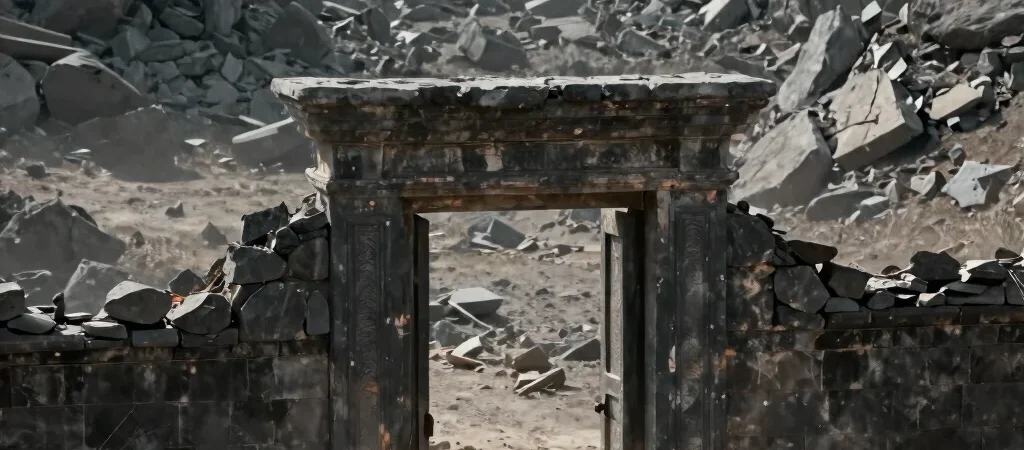
You turn a corner and find a doorway buried under stone, its threshold worn smooth while the walls around it remain broken. That contrast invites a story, but it does not prove one. The most satisfying way to explore a ruined world is to separate what the scene shows from what you imagine happened there.
Begin with what is visible
Look for specific evidence: repeated symbols, objects placed together, a path that leads toward or away from a structure, or damage concentrated in one area. Compare the detail with other locations instead of treating a single striking image as an answer. Some games use environmental clues to reward close attention; others leave details open to interpretation.
Build theories carefully
A useful theory explains more than one clue without pretending to settle every question. If a sealed room contains supplies and the route outside is damaged, you might infer that people sheltered there—but that remains an interpretation unless the game confirms it. Keep the distinction clear: the room and its contents are observed facts; the reason they were left behind is a hypothesis.
That distinction makes discussion richer, not colder. When comparing notes with other players, describe where a clue appears and what you think it suggests. Someone else may have noticed a nearby marking or a related scene that changes the reading.
Follow the world’s patterns
The strongest environmental storytelling often depends on contrast: a carefully maintained object inside a wreck, fresh tracks across an abandoned road, or a grand hall repurposed for an ordinary task. Ask what the game wants you to notice, then look for the same visual language elsewhere. A repeated motif can point toward a larger theme even when the timeline stays uncertain.
You do not have to solve every ruin to appreciate it. Take a screenshot or jot down a landmark if you want to revisit the question later. The world feels more alive when you leave room for evidence, opinion, and mystery to coexist.