
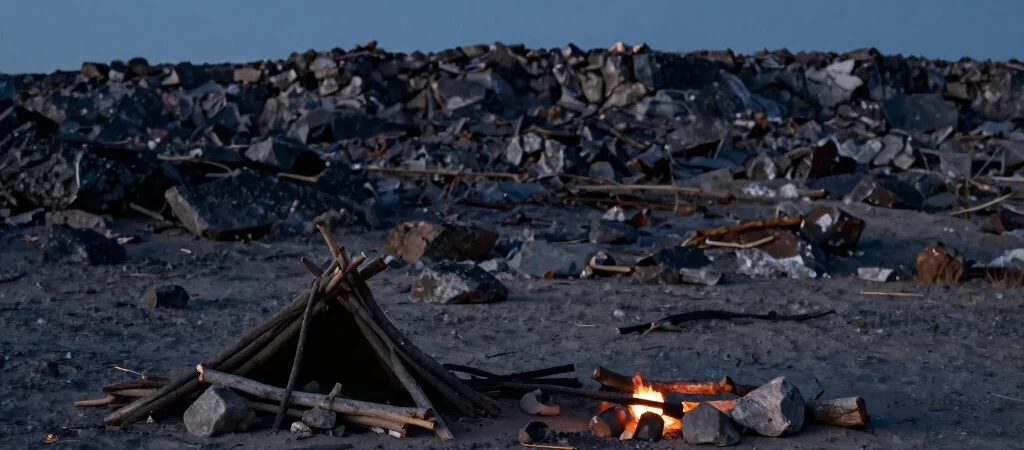
A survival game can make a branch, a stone, and a patch of daylight feel like a countdown. It is tempting to gather everything in reach before dark, but that turns a useful head start into a full inventory and a longer walk home. Treat the first evening as triage: secure what keeps you alive now, then learn the world at a pace you can afford.
Spend daylight on certainty
Start with the needs the game actually tracks. If the interface shows hunger, temperature, or stamina, check which one is becoming urgent rather than guessing from genre conventions. Look for a defensible place near visible resources, but do not assume every game lets you build a shelter on day one.
A short scouting loop is usually more useful than a long march into unfamiliar terrain. Note a landmark you can recognize on the return, collect only the materials tied to an immediate objective, and head back before your route becomes hard to read. The aim is not to master the map before nightfall; it is to make tomorrow less uncertain.
Keep the pack purposeful
Inventory pressure changes how a player moves through a world. Give scarce space to items that solve a current problem, such as basic tools or food when the game’s systems make them necessary, and leave room for discoveries on the way back. If an item has no known use yet, note where you found it rather than carrying every unknown object.
Let the first night teach
Darkness is not always a cue to keep moving. In some games it brings stronger threats; in others, the main cost is reduced visibility or a harsher survival meter. Watch what changes, record what the interface confirms, and separate that observation from a theory about the world.
Before setting out again, choose one clear next goal: find a safer route, learn a crafting recipe, or locate a reliable source of a needed resource. A good first night does not require a perfect base. It leaves you with a plan, a known landmark, and fewer avoidable risks.